
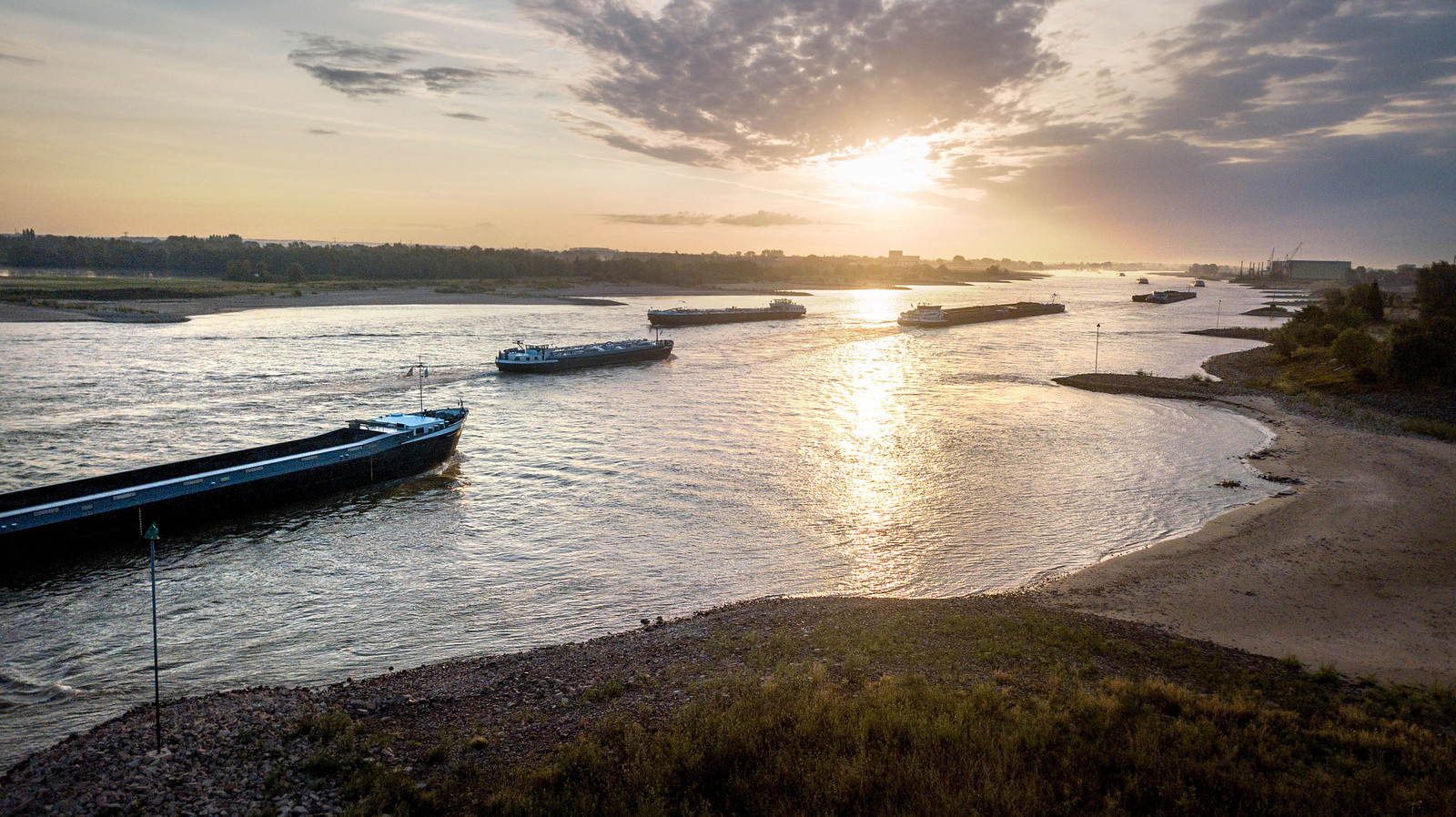
The Netherlands is currently experiencing a prolonged period of drought, resulting in significantly reduced water levels on several rivers and waterways. The low water situation is increasingly affecting inland shipping operations, with consequences for vessel capacity, voyage planning and cargo flows. Dutch authorities (Rijkswaterstaat) have reported that the effects of the drought on shipping are continuing to increase, as reduced river discharges and limited rainfall in the Rhine and Maas catchment areas contribute to declining water levels.
Impact on inland shipping operations
The reduced water levels are creating operational challenges for inland vessels navigating Dutch waterways. Ships are required to sail with reduced draughts in certain areas, meaning that vessels may need to carry less cargo per voyage to maintain safe under-keel clearance. This can result in additional voyages being required and may affect transport schedules and logistics planning.
In addition, water-saving measures have resulted in longer waiting times at certain locks. To preserve available water supplies, some locks are being operated less frequently, which can lead to delays for vessels waiting to pass.
Rijkswaterstaat provides continuous updates on the current drought situation through its Droogtemonitor. This platform provides an overview of relevant developments, including river conditions, water levels, measures taken by authorities and the impact on sectors such as shipping. Shipowners and operators can use this information to monitor changing water conditions and assess potential operational consequences for inland navigation.
Legal aspects
Under Article 6:75 Dutch Civil Code, non‑performance is not attributable to a party when it results from a circumstance that is not due to its fault, and for which it is not accountable under law, legal acts, or generally accepted standards. Low water levels may qualify as such a circumstance when the following conditions are met:
- Unforeseeability: The exceptionally low water levels were not reasonably predictable at the time the transport contract was concluded.
- Lack of responsibility: The shipping operator did not cause or contribute to the water conditions and cannot reasonably influence them.
- Objective impossibility or severe hindrance:Navigation becomes impossible or disproportionately obstructed, for example because vessels cannot achieve sufficient draft to carry contracted cargo volumes.
Many inland shipping and charter agreements contain express force‑majeure clauses that list low water levels as a qualifying event. When a vali clause applies, parties may be released from performance obligations without libality for damages, provided that notification requirements and procedural steps in that clause are properly followed.
Europe
Currently, low water disrupts shipping primarily on the Rhine, Danube, Sava, and Tisa, causing reduced cargo loads, higher transport costs, and in some areas complete navigational shutdowns.
NNPC Correspondents remains available 24/7 to support clients with questions or issues relating to navigation, cargo operations or potential claims arising from the ongoing low water conditions.
E correspondents@nnpc-correspondents.nl
T+31 (0)85 48 33 121
Photo: courtesy De Gelderlander.