
Key lessons from the Dutch Safety Board report (July–December 2025)
The Onderzoeksraad voor Veiligheid (Dutch Safety Board) report on maritime accidents (July–December 2025) identifies systemic prevention lessons from incidents involving Dutch-flagged vessels. Its core message: safety requires bridging the gap between formal procedures and actual work practices.
- Addressing structural workarounds
A recurring theme is the danger of structural workarounds: practical solutions that become ingrained without formal risk assessment. The fatal steam accident aboard “Nieuw Amsterdam” (March 2024) exemplifies this: a partially open valve, used to prevent condensate buildup in a rarely used steam line, had become routine. During maintenance, the valve was fully closed, isolating a pipe section where condensate accumulated. Upon restart, steam hammer ruptured an expansion joint, filling a compartment with >100°C steam in 86 seconds, killing two crew members. Prevention: Explicitly document workarounds, periodically reassess their safety under changing conditions (e.g., maintenance, crew rotations), and ensure all personnel understand the underlying risks and technical principles.
- Knowledge transfer and training gaps
Implicit, experience-based knowledge is insufficient, especially with rotating crews. The “Theresa Lima” incident (July 2025) saw two crew members overcome by CO₂ (1,100 ppm, far exceeding the 86 ppm safe limit) while cleaning a cargo tank. While they knew CO₂ was dangerous, they lacked understanding of how quickly hazardous concentrations could develop. Prevention: Training must go beyond procedures to include:
- System knowledge (e.g., steam dynamics, gas behavior).
- Hazard recognition (e.g., condensate buildup, CO₂ sources).
- The reasoning behind safety practices, not just the steps.
- Enhancing safety management systems (SMS)
SMS often fail to capture real-world practices. The collision between “Vox Maxima” and “Marine Honour” (June 2024) illustrates this: Electrical system maintenance left multiple circuit breakers disconnected, a condition not documented or communicated between engine room watches. Upon departure, the system lacked redundancy; minutes later, overload caused total power loss, leaving the vessel unmanoeuvrable and causing a major oil spill. Prevention: SMS should:
- Incorporate mechanisms to identify and assess workarounds.
- Use structured methods (e.g., HAZID sessions) for complex operations.
- Facilitate regular reflection on actual work practices vs. formal procedures.
- Technical and operational measures
Key lessons from specific incidents:
- Steam systems: Implement Lock-Out-Tag-Out (LOTO) procedures and risk assessments for condensate/steam hammer risks.
- Mooring operations: Conduct specific risk assessments for non-floating ropes near propellers (e.g., “Fiona B” fatality, May 2024). Ensure clear communication and adequate crew levels.
- Electrical systems: Verify redundancy before departure; use structured handover checklists.
- Navigation: Use appropriate display scales (e.g., “Catro IV” grounding, January 2025).
- Emergency equipment: Ensure anchors/lifesaving appliances are functional without main power.
- Complex multi-party operations
The fatal Botlek incident (February 2024), where a crane vessel collided with a drilling platform, revealed coordination gaps between parties performing simultaneous operations. Follow-up actions show progress:
Damen Shiprepair now conducts structured HAZID sessions for complex operations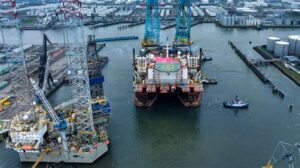
Regional Pilot Corporation revised procedures for special voyages, ensuring all parties participate in pre-voyage briefings. Prevention: Joint risk assessments, clear task division and shared responsibility are critical.
- Fatigue and Emergency Preparedness
- Fatigue: The “Fiona B” incident highlighted how long workdays, unclear plans, and poor communication contributed to a fatality.
- Emergency procedures: “Vox Maxima” ’s inability to deploy its anchor during power loss showed that emergency systems must be tested under real conditions.
Conclusion: A holistic approach
The report’s prevention message is clear: Safety cannot be ensured by rule compliance alone. The maritime sector must:
- Make workarounds explicit: document, evaluate, and reassess them.
- Improve knowledge transfer: train on why procedures exist, not just how to follow them.
- Enhance SMS: capture real work practices, not just formal procedures.
- Address human, technical, and organizational factors. Hidden vulnerabilities arise from their interplay.
By adopting this approach, the industry can anticipate and prevent accidents before they occur, turning lessons learned into lasting safety improvements.
Comment
Above, we have summarized a few incidents from a comprehensive report. The full report provides more detailed information and insights. The website of the Dutch Safety Board can be found here: https://onderzoeksraad.nl/en/
The Dutch Safety Board report is public and includes specific names and details. The specific references are instructive for all of us, which is why we have included them in this article.