
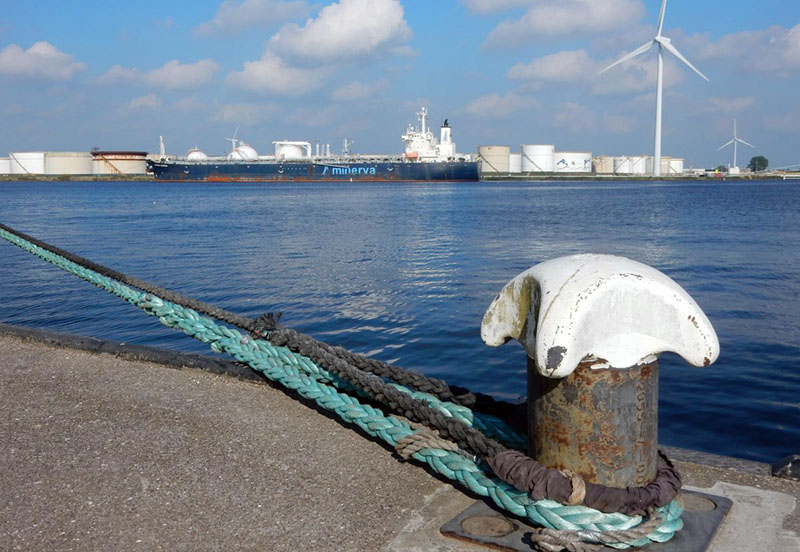
The Dutch government is preparing a national ban on the discharge of scrubber wastewater into Dutch ports and inland waters. The measure aims to protect local water quality and aligns with similar restrictions being introduced across Europe.
Scrubbers, or exhaust gas cleaning systems (EGCS), were developed to help vessels meet the sulphur emission limits under MARPOL Annex VI. While effective in reducing air pollution, open-loop systems discharge washwater that can contain sulphur compounds, heavy metals and hydrocarbons. This has led to growing concern about their impact on port and inland water environments.
Port-specific rules
- Port of Amsterdam: From 1 January 2025, seagoing vessels may no longer discharge open-loop scrubber washwater while alongside. Ships fitted with hybrid systems must switch to closed-loop mode or use compliant low-sulphur fuel such as marine gas oil (MGO).
- Port of Rotterdam: Both open- and closed-loop scrubbers remain permitted in port waters, but all scrubber sludge must be delivered to port reception facilities.
National outlook
The Netherlands’ regulatory approach is aligned with regional moves. Under the OSPAR Commission framework, all 15 contracting countries in the North-East Atlantic have agreed to ban open-loop EGCS discharge in ports and inland waters from 1 July 2027. A full ban on all scrubber discharges (including closed-loop) will follow by 1 January 2029.
While the upcoming Dutch ban will only apply to ports and inland waters, discharge in coastal waters and the open sea remains allowed unless further regional restrictions are introduced. The Netherlands’ stance reflects a broader North-West European trend under the OSPAR framework, which will gradually tighten discharge rules after 2027.
Shipowners calling at Dutch ports should verify local requirements in advance and be prepared to operate in closed-loop mode or switch to compliant fuel when necessary. NNPC Correspondents will continue to closely monitor the developments and remain 24/7 available to assist P&I Clubs and their members. Should you have any questions or require assistance, please contact us at correspondents@nnpc-correspondents.nl.